Unique Exhibition – Decoration on Wood
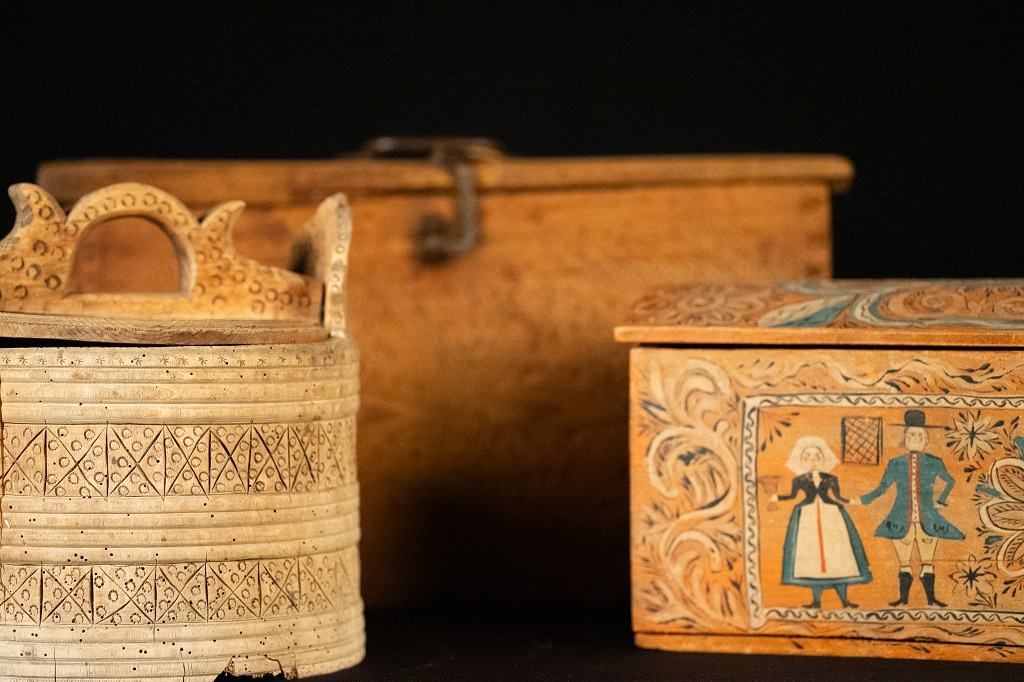
In the exhibition Decoration on Wood we have gathered a large selection of treasures from the museum's collections. Many of which have never been on public display before. Rose painting "rosemaling", geometric wood...

About
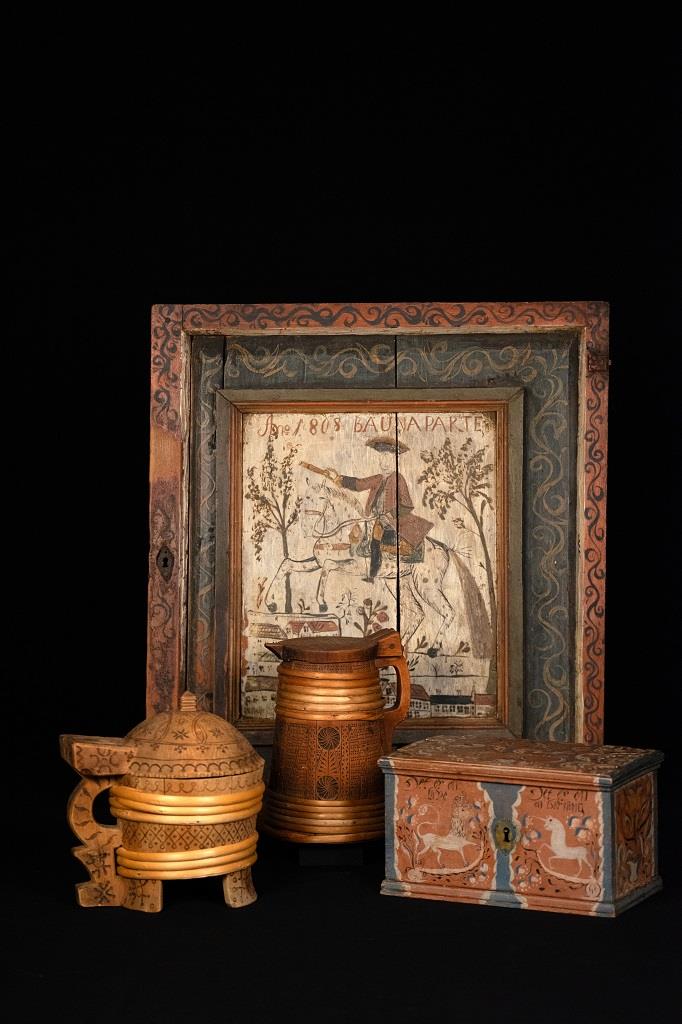
In the exhibition Decoration on Wood we have gathered a large selection of treasures from the museum's collections. Many of which have never been on public display before.
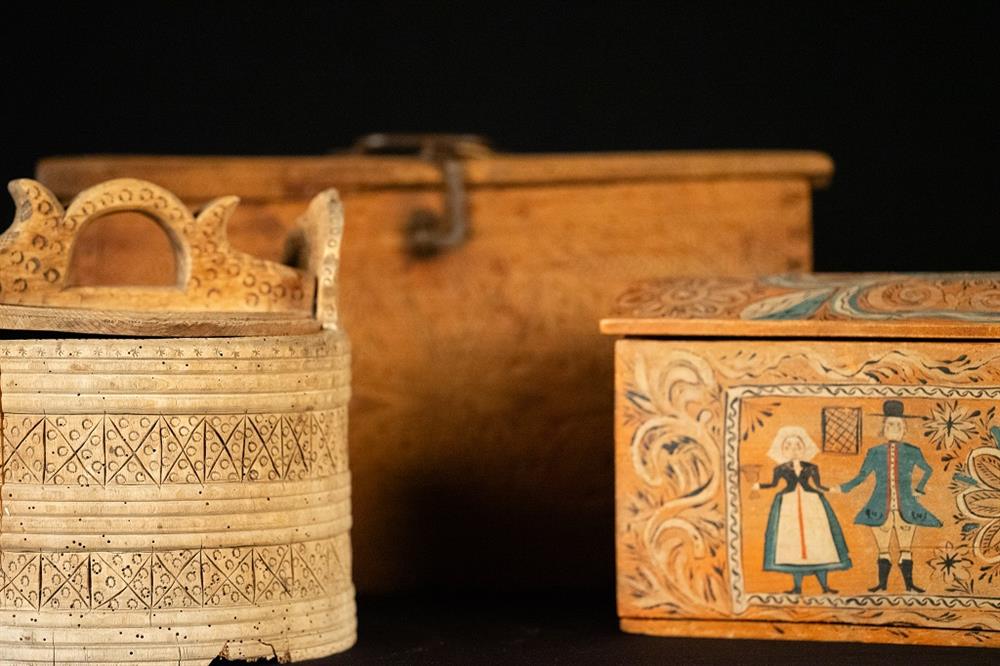
Rose painting "rosemaling", geometric woodcarving "karveskurd", and pyrography "svidekor" can be found on a range of beautifully preserved objects from the 18th and 19th centuries. These items come from farms in the Hardangerfjord region and were once used in everyday life. The selection of decorated objects was far from random. Here, you will find ale bowls with horse-head handles, rose-painted bowls, and goblets with pyrography—used for drinking beer at festive gatherings. Butter molds and raised serving dishes were also part of social occasions, brought to the farm in painted baskets along with porridge containers. Chests and boxes, used to store treasured belongings, were similarly decorated. The motifs in the decorations have deep historical roots, symbolizing fertility and abundance.
Karveskurd is a form of wood carving in which the designs often consist of geometric patterns, such as circles and rosettes. Svidekor involves heating iron stamps in various geometric shapes and burning patterns into the wood. Both of these techniques are very old. Rosemaling however, gained widespread popularity from the late 18th century onward. It features stylized flowers and vines, as well as biblical scenes, exotic animals, and portraits. Many renowned rose painters worked in Hardanger, including Gunnar Arnfinnson Aarekol, whose works are prominently featured in the exhibition.
