


A black-and-white sketch, written almost thirty years ago. Now it has been given colours, shapes and movement.
Fjord, mountains, sea and narrow roads. No signpost tells you where you are – and yet you know.
Nobel laureate Jon Fosse grew up in Strandebarm, by the Hardangerfjord. The landscape and its colours shaped him long before he wrote a single word.
A narrow arm of the fjord, with steep slopes on either side. A father and son in a small boat on Fyksesund, the water perfectly still.
He calls it safe. He calls it home. Anyone who has stood where the fjord opens up will understand why.
In 1997, the Norwegian writer Jon Fosse wrote a screenplay that was never filmed. Almost thirty years later, it has become Beloved, and the landscape he grew up in is part of the story.
Jon Fosse is best known for his plays and novels, which have been staged and translated around the world. In 2023, he was awarded the Nobel Prize in Literature.
Back in 1997, Fosse wrote a screenplay called Bad Moon Rising, at the request of Tom Remlov, then head of the Norwegian film company Norsk Film. It is the only screenplay he has written directly for film, and he never thought it would actually be made. Decades later, director Erik Poppe, known internationally for The King's Choice and Utøya: July 22, took up the text. Together, they have made Beloved (Norwegian title: Kjærast), a film about Asle and Gerd, who have a son together. Asle goes to sea, Gerd stays at home, and at the heart of the film lies a simple question: how much distance can love take?
For Fosse, the film is a painting made from his sketch.
"My black-and-white sketch has been given many colours, shapes and movement." – Jon Fosse
Poppe calls it a story told by two. The underlying story is Fosse's. The images are Poppe's.
You are not meant to recognise every scene in Beloved. You are meant to recognise Western Norway. Fosse has never written about one particular landscape.
"It is not a particular West Norwegian landscape, but a West Norwegian landscape with fjord and mountains and sea and coast and narrow roads. My Western Norway." – Jon Fosse
The film was shot in several places along the west coast, from Stad and Selje in the north to Hardanger. Yet it never tells you where you are. For Fosse, that is exactly what lets the mythical Western Norway come through: when it is not tied to one place, you can always say it is Western Norway.
So where does Western Norway begin?
"When the flat landscape starts to rise, and you see the fjord, then you are in Western Norway." – Jon Fosse
He describes the feeling in two words: safe, and home.

The car recurs throughout Fosse's books, and it appears in Beloved too. Fosse himself likes driving alone through beautiful landscapes – on the way from one place to another, always moving. To him, it is a lot like writing.
"Writing is like getting a little away from yourself. When you drive from one place to the next, it is, in a way, a parallel." – Jon Fosse
In Western Norway, it is the road that takes you through the landscape: along the fjord, through the tunnels and over the bridges.

Fosse grew up in Strandebarm in Kvam, on the Hardangerfjord, and lived there until he was 15 or 16. He says himself that he was shaped by the landscape around him: the fjord, the mountains and the colours.
Water, fjord, sea and rain run through all his writing, and in Beloved the sea is both what pulls Asle away and what keeps Gerd where she is.
There is one place in Hardanger you can point to in the film: Fyksesund. In the scene where Asle and his son are out in the boat, this is the fjord arm you see, with steep, wooded slopes and still water between them.
Fyksesund cuts eleven kilometres inland from the Hardangerfjord between Øystese and Ålvik – narrow, with mountains rising almost a thousand metres straight up from the water. After rain and snowmelt, waterfalls run down the hillsides. The further in you go, the quieter it gets. Some of the hamlets here still have no road, and at the head of the fjord lies Botnen, which you can only reach by boat or on foot.
Between mountains this high, a person becomes small. Perhaps that is why the landscape suits a film about distance so well.
To see Fyksesund for yourself, the fjord safari from Norheimsund takes you into the fjord arm and ashore at Botnen. If you would rather walk, From Fjord to Fjell starts with a boat trip to Botnen and follows the old path farmers once used between the fjord and the summer mountain farms. And if you drive county road 7 between Øystese and Ålvik, you can look straight into the fjord arm from Fyksesund Bridge.
One of the scenes in Beloved was filmed at a huge, hollow oak. The tree is Brureika – the Bridal Oak – on the Lothe farm near Utne in Ullensvang, once named Norway's largest tree. Its name comes from an old wedding custom: wedding parties gathered at the oak and were served the bridal dram before continuing to the wedding farm.
The trunk measures more than ten metres around and is split in two, held together by iron bars, yet its crown is still full of leaves. In a film about how much love can take, it is hard to imagine a better place.

Beloved (2026)
Norwegian title: Kjærast
Directed by Erik Poppe
Screenplay by Jon Fosse
Starring Leo Magnus de la Nuez and Kristi-Helene Giæver Engeberg
Production: Paradox
Distribution: SF Studios
The screenplay is published in Norwegian by Samlaget: Bad Moon Rising (Kjærast)

Botnen, the small roadless hamlet at the head of Fyksesund, was once known for making Hardanger fiddles.
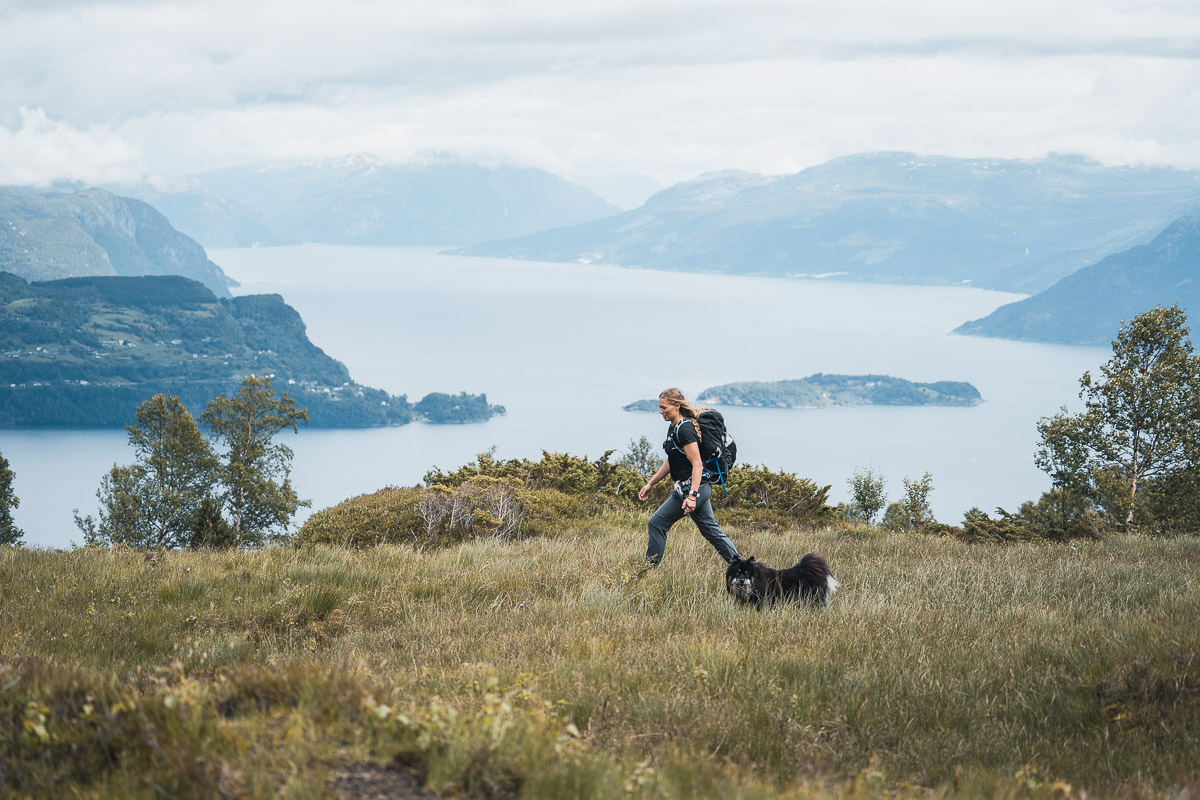
The hike to Krokavatnet in Norheimsund is an easy and accessible hike that offers a stunning view over the Hardangerfjord.
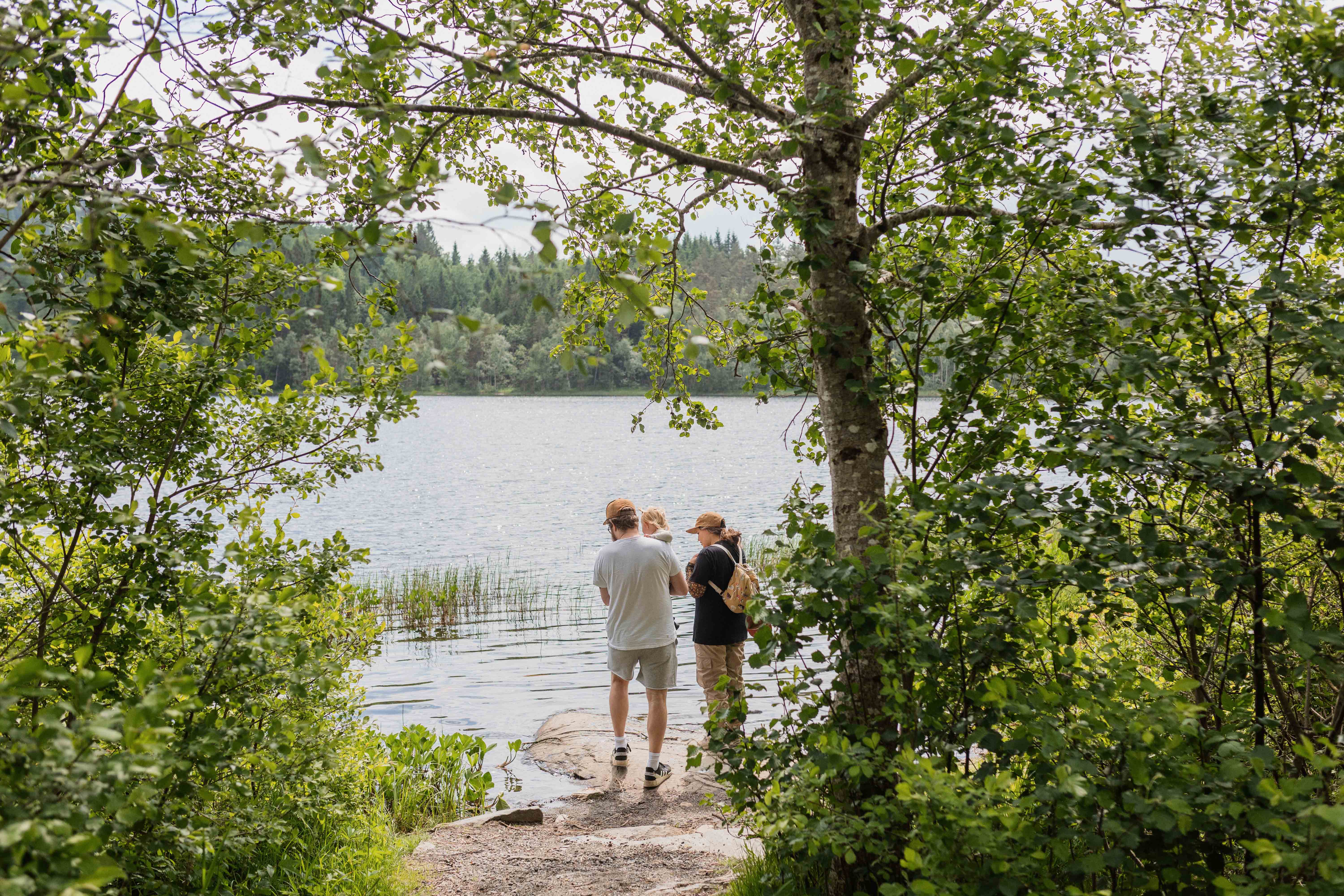
Experience the Unique Goldfish lake in Kvam – A Family-Friendly Spot to Feed Goldfish, Enjoy Nature, and Relax by the Water.

Surrounded by history and national romance, the restaurant at Thon Hotel Sandven serves the most delicious meals.


