Hardanger Bridge
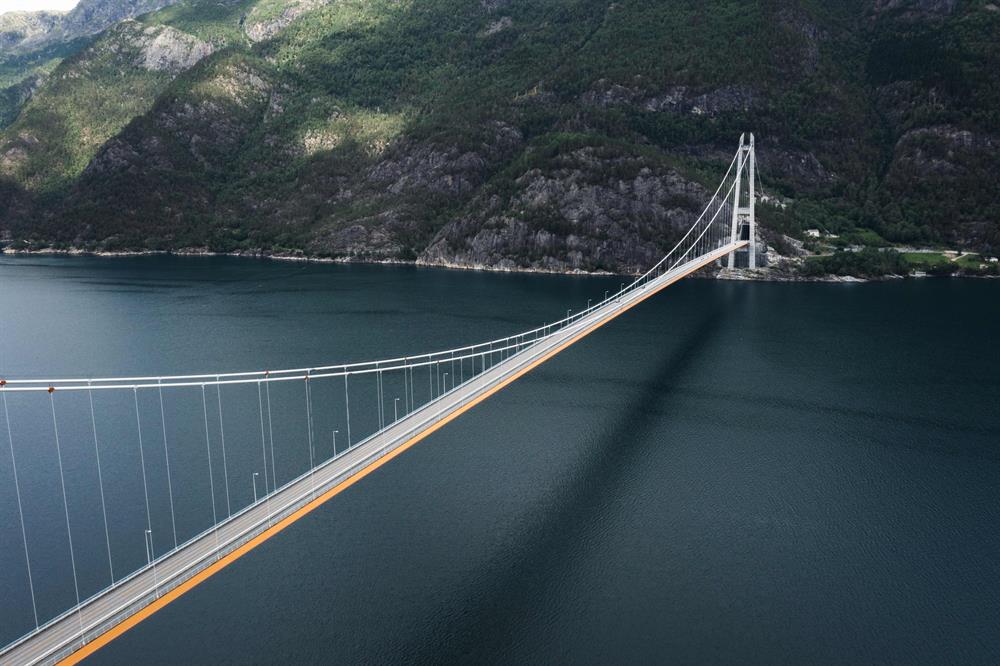
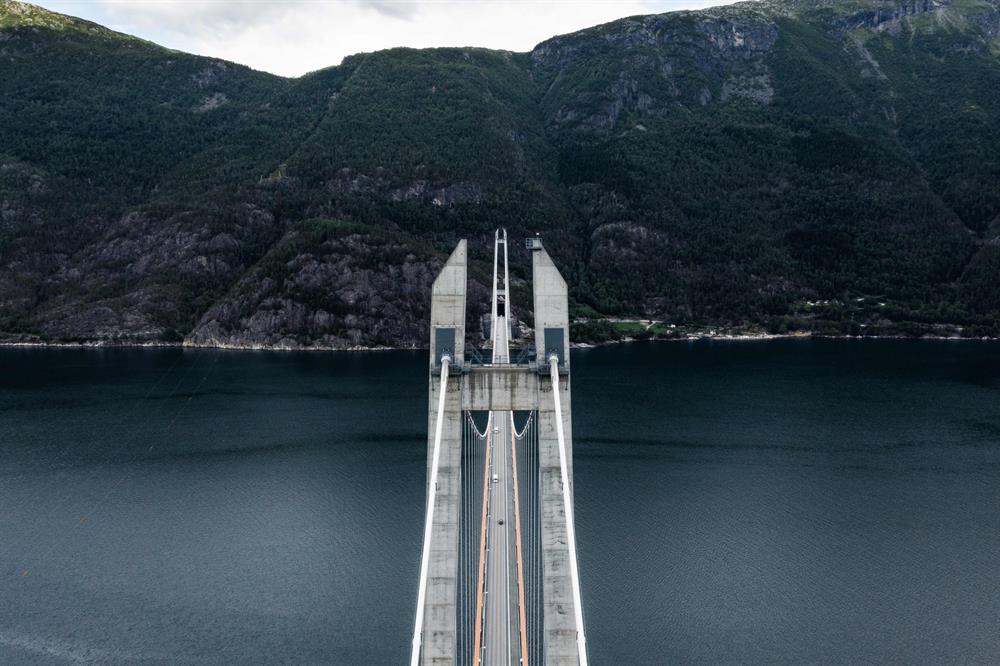
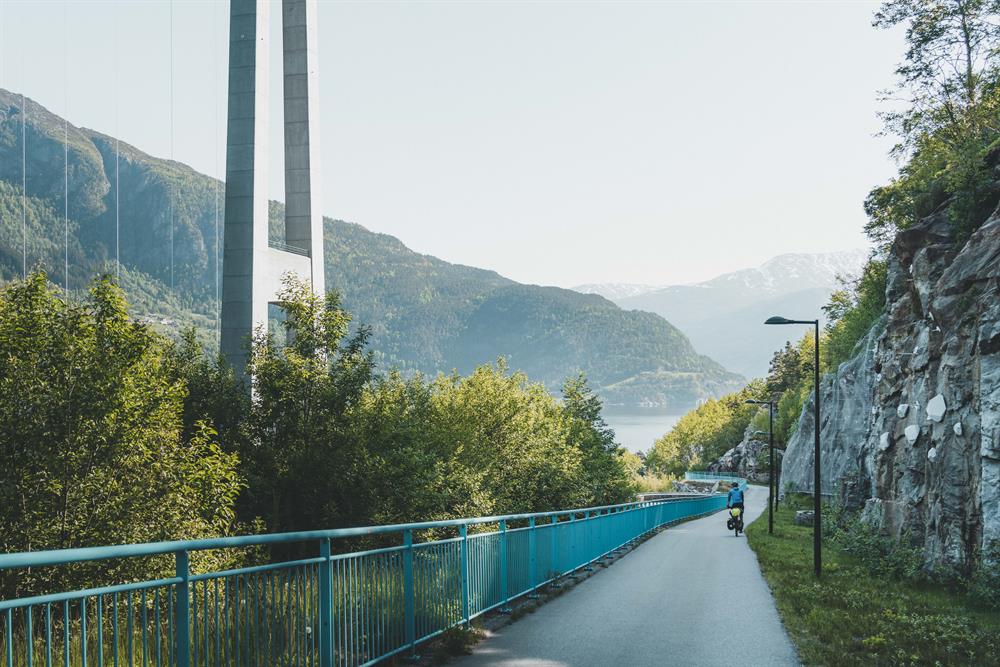
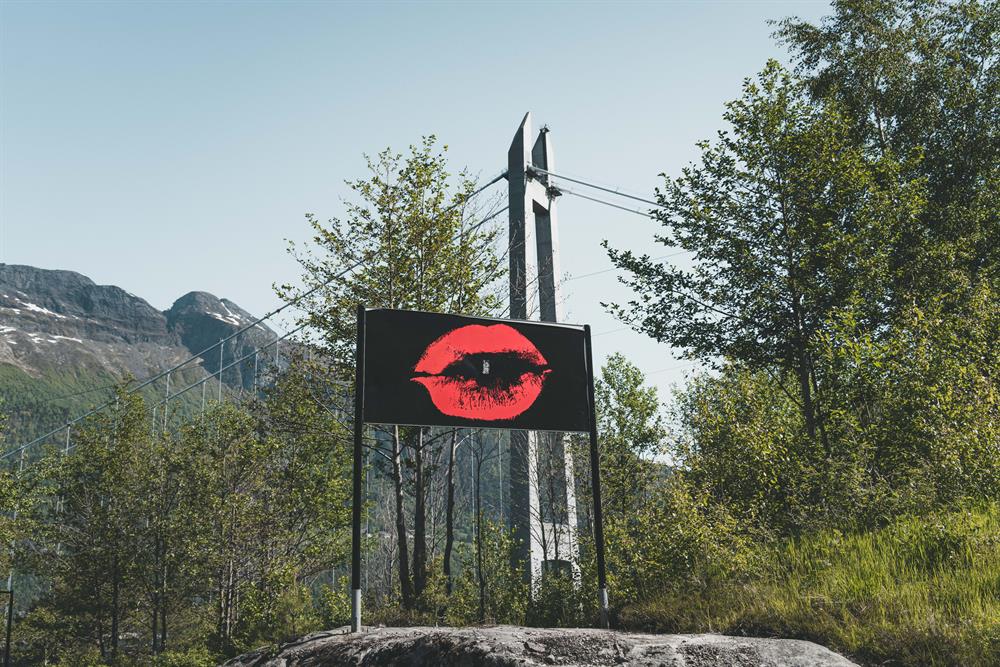
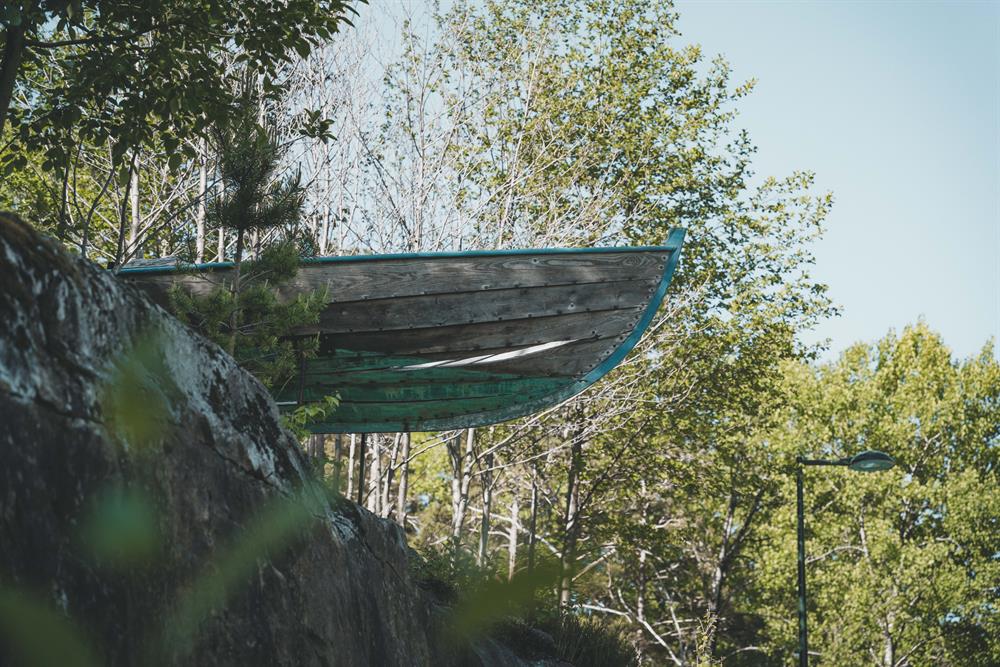
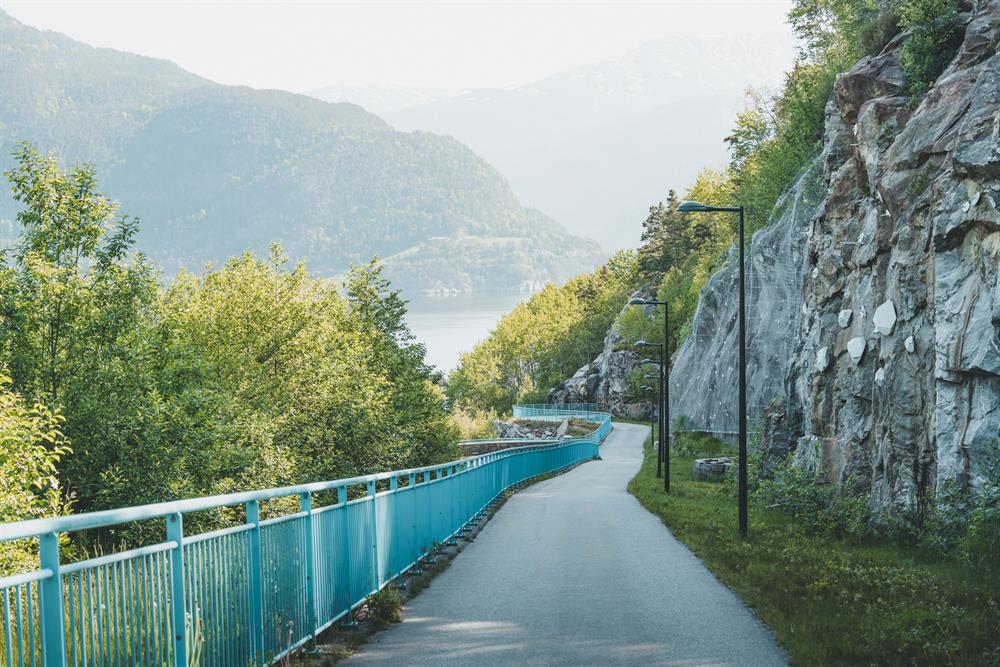
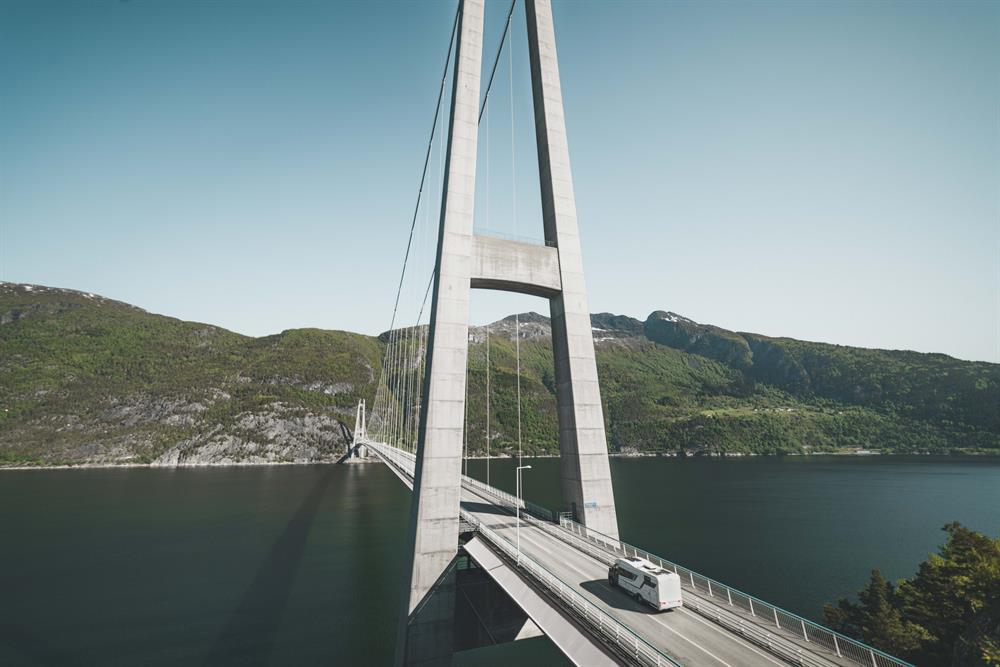
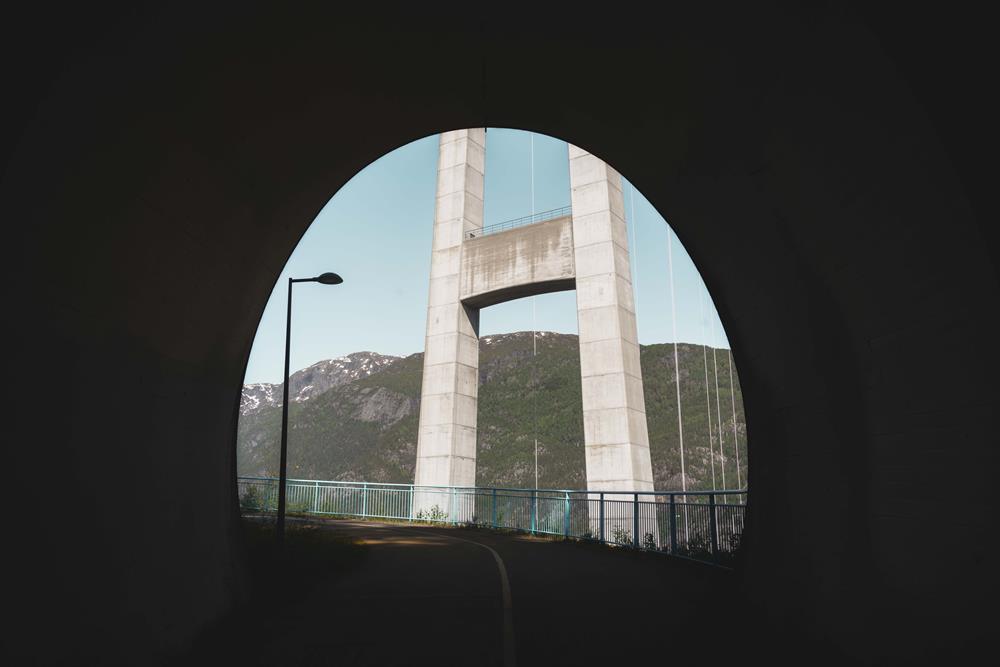
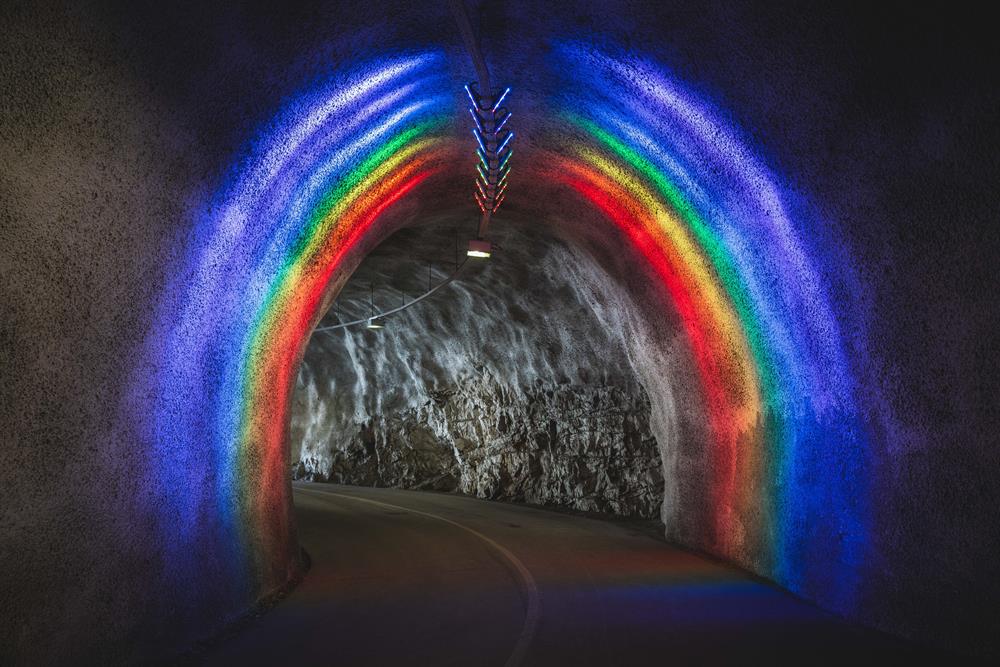
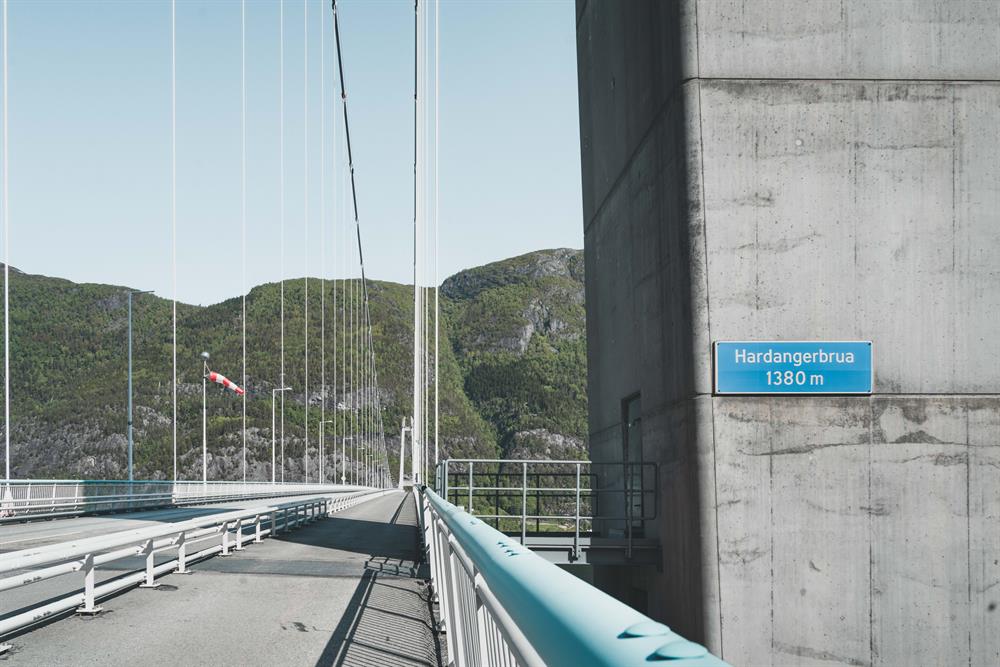
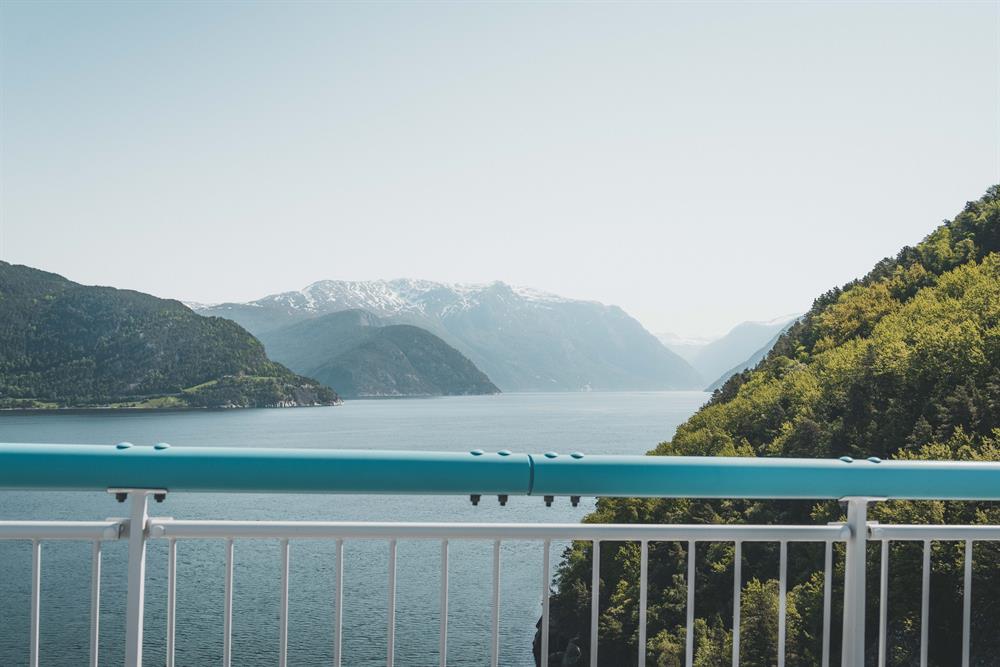
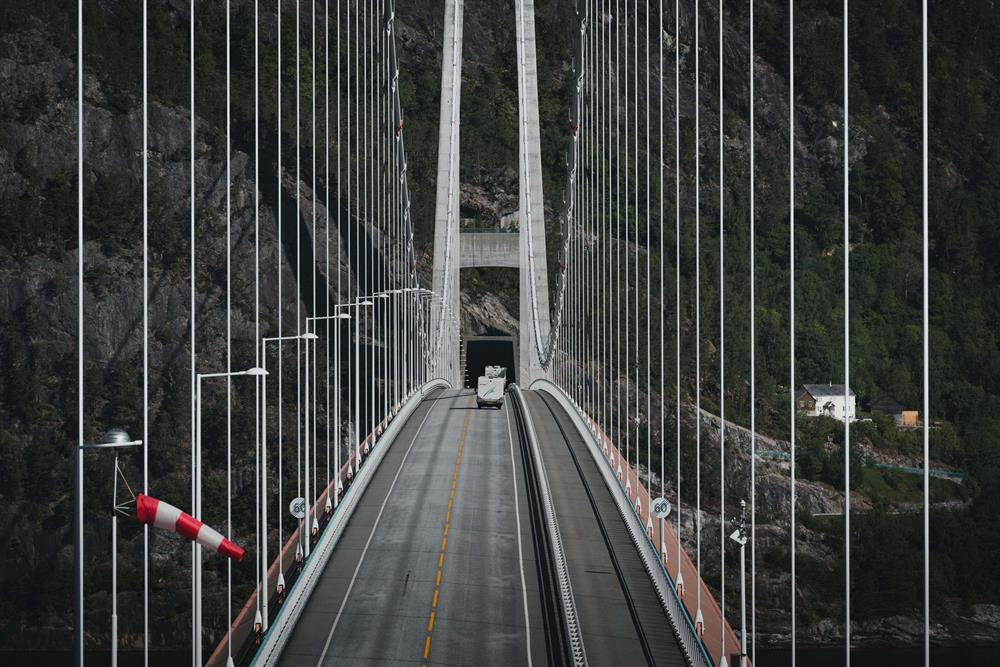
The Hardangerbridge connects the south (at Bu) with the north side (at Vallavik) of the Hardangerfjord. On a separate foot- and bike path, you can cross the bridge by walking or cycling.
Booking
Contact information
About
At Bu, there is a parking lot with a nice viewpoint.
The Hardanger Bridge is 1380 metres long and the longest suspension bridge in Norway. At Bu (south end of the bridge) there is a parking and picnic area, public toilet and a viewpoint to the bridge, accessible to disabled people. At Vallavik (north end of the bridge) there is also a parking area and a viewpoint to the bridge.
You can walk or cycle across the bridge. The view from the bridge is excellent. Enjoy the fjord landscape, or the construction itself: the main span between the towers is 1310 metres, the total length 1380 metres, the towers stand around 200 metres above the fjord, and clearance below is 55 metres. The walk is also suitable with wheelchairs and baby strollers. However, the slopes from the parking areas to the bridge are a bit steep (especially from Bu and down to the bridge).
FAQ
The Hardanger Bridge crosses the Hardangerfjord between Bu on the south side and Vallavik on the north side, on Road 13 in the Hardanger region of western Norway. The nearest village is Eidfjord, about 2.5 hours' drive from Bergen and 4.5 hours from Oslo, and roughly an hour from Voss. It sits on the main road route between Norway's two largest cities, so if you are driving Oslo to Bergen across the Hardangervidda plateau, you will cross it — Road 7 over Hardangervidda is the fastest of the main routes between the two cities, at around seven hours, and runs as a Norwegian Scenic Route past Vøringsfossen. The bridge is open all year.
Yes, if you are driving. There is no toll booth and no barrier to stop at — cameras read your number plate as you cross at normal speed, and the charge is settled afterwards. The toll applies in both directions, so crossing and coming back is charged twice; a car pays roughly NOK 115–145 each way, depending on whether it carries a Norwegian AutoPASS tag. In a rental car the tolls go to the rental company, which bills you afterwards, usually with an admin fee — worth checking your rental agreement so it isn't a surprise. If you brought your own foreign-registered car, register it free with Epass24 to be billed directly; without that, a vehicle-owner lookup fee is added to each toll. Current rates for all vehicle types are listed by Ferde.
Yes, and it costs nothing. Pedestrians, cyclists, mopeds and motorcycles pay no toll at all. The bridge has a dedicated path separated from the traffic lanes, so you are not walking beside cars. The bridge is 1,380 metres long and takes about half an hour to cross on foot. Counting the approach from either car park, the full return walk is 3.5 kilometres and takes one and a half to two hours. The path is paved the whole way and runs through lit tunnels at each end; it works with a wheelchair or a pushchair, though the ramp down from the Bu car park is steep. More detail in the listing Hardanger Bridge on foot or on wheels.
There are car parks at both ends, both free. Bu, on the south side, has parking, picnic tables, a wheelchair-accessible viewpoint and a toilet that is open year round, about 500 metres above the bridge deck — this is the better stop if you want the whole span in one photograph. Vallavik, on the north side, has parking and a viewpoint just 200 metres from the bridge, but no toilet. You cannot stop or park on the bridge itself, so if you want to look at it rather than drive over it, pull off at one of these.
Crossing by car takes under two minutes, and from inside the vehicle you mostly see railings and cables. If you want to see the bridge, you have to stop. Ten minutes at the Bu viewpoint gives you the full structure against the fjord and the mountainsides. Another half hour gets you out onto the walkway, which is where the scale registers — 55 metres of open water beneath you and the towers rising almost 150 metres above the deck. The approach adds to it: you come out of a tunnel, through a roundabout blasted inside the mountain, and are suddenly out over the fjord.
It is the longest suspension bridge in Norway. Worldwide it now ranks around twentieth: the main span between the towers is 1,310 metres and the total length 1,380 metres, which placed it in the global top ten when it opened in 2013, before a series of Chinese suspension bridges overtook it. The world's longest is the 1915 Çanakkale Bridge in Turkey at 2,023 metres. The towers stand roughly 200 metres above the fjord, there is 55 metres of clearance for ships beneath the deck, and each of the two main cables was spun from 10,032 steel wires — 36,000 kilometres of wire in total.
The Hardanger Bridge opened on 17 August 2013. Before that, crossing here meant queuing for the Bruravik–Brimnes car ferry, which had linked the two sides of the fjord for decades — the bridge removed one of the last ferry crossings on the main road route between Oslo and Bergen. A bridge here had been debated for more than fifty years before the Norwegian parliament approved it in 2006; construction began in 2009 and cost around NOK 2.5 billion.
Yes. Skyss bus 990 between Voss and Odda stops at Bu, and bus 991 runs between Eidfjord centre and Bu. Book Hardanger sells a viewpoint trip from Eidfjord using the public bus, from NOK 180 return, with either 1 hour 15 minutes or 2 hours 15 minutes at the bridge — the longer option leaves time to walk across and back. Plan connections at entur.no, which covers all Norwegian public transport in one search.
It closes in strong wind. The bridge has wind sensors and shuts automatically at wind speeds of 27–30 metres per second — around 100 km/h — reopening on its own once the wind drops. Rain and snow do not close it. Closures happen mostly in autumn and winter and usually last hours rather than days, but there is no short detour around the fjord, so if a storm is forecast check road status at vegvesen.no before setting out. Note also that there is almost always a breeze on the bridge, even in fine weather — bring a windproof layer for the walk.
The bridge sits among several of Hardanger's best-known sights. From Bu it is ten minutes to Eidfjord and another half hour up the Måbødalen valley to Vøringsfossen, a 182-metre waterfall with viewing platforms and a stepped footbridge across the gorge, opened in 2024. Also from Eidfjord you can drive or hike up to Kjeåsen, a mountain farm 600 metres above the fjord — the road up is open from around 1 May to 31 October, depending on weather and road conditions. North of the bridge lie Ulvik and the Osafjord; south, Road 13 continues towards Odda and the trailhead for Trolltunga. For questions about the bridge or the area, the tourist offices in Eidfjord (turistinfo@visiteidfjord.no) and Ulvik (visitulvik@ulvik.kommune.no) can help.
